
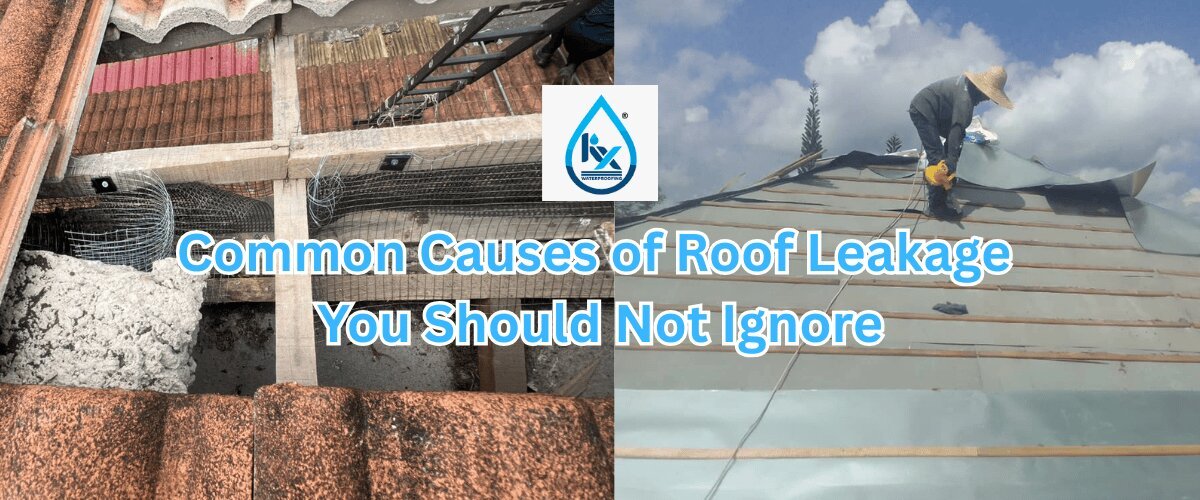
Common Causes of Roof Leakage You Should Not Ignore
The honest answer is simple. The most common causes of roof leakage are cracked or displaced roof tiles, failed flashing, blocked drainage paths, old sealant, fastener weakness, rusting on metal roof sections, surface ageing, and poor earlier workmanship. In Malaysia, especially in places like Kuala Lumpur and Johor Bharu, these causes are made worse by heavy rain, constant humidity, strong sun exposure, and the habit many owners have of delaying inspection until water has already entered the house. By the time most people search for Roof Repair, the roof has usually been warning them for some time. The warning signs were just smaller, quieter, and easier to ignore.
That is why this topic matters. Roof leakage is rarely only about water. It can affect ceiling finishes, furniture, indoor smell, paint condition, electrical safety, tenant comfort, and overall property value. It also creates stress because the visible sign inside the building does not always match the true entry point above. Water can travel in confusing ways. For owners in Kuala Lumpur or Johor Bharu, understanding the usual causes of leakage is one of the best ways to avoid repeat repairs that solve the symptom but miss the real problem. A good contractor such as KX Waterproofing becomes useful at exactly this stage because the issue needs interpretation, not just material.
The official website at KX Waterproofing is a useful reference because it shows that the company works across waterproofing, roof tile related categories, and metal deck related work. That matters because roof leaks do not come from one universal cause. Different roofs fail differently. If you want to understand the general service scope first, review the services page. If you want to explore roofing categories further, browse the products page. If the leak is already active and you need someone to look at it, the contact page is the direct next step.
It is worth saying upfront that many leaks are not new when they first become visible. They are only newly visible. The roof may have been allowing moisture entry for weeks or even months before the owner notices a stain or drip. During that time, timber, insulation, internal ceiling board, paint, and adjoining joints may already have been exposed. This is one reason people are shocked when a “small leak” turns into a wider repair scope. The leak felt small because the visible symptom was small. The hidden effect was not.
Cause Number One Cracked, Slipped, or Ageing Roof Tiles
Roof tiles are a very common source of leakage in Malaysian homes. Over time, tiles can crack, shift, loosen, or break due to weather exposure, ageing, impact, or previous work done carelessly on the roof. A single damaged tile can allow water to enter beneath the visible outer layer, especially during intense rain. Once that happens, moisture can travel before appearing inside the house, which makes diagnosis trickier than many owners expect.
In Johor Bharu, homes with older tiled roofs often show this pattern after years of heat and storm exposure. In Kuala Lumpur too, tiled roofs can develop local weakness that owners do not notice until the rainy season becomes aggressive. The frustrating thing is that from the ground, the roof may still look fairly normal. One or two damaged tiles are not always obvious from below. That is why people sometimes say, “I do not understand, the roof still looks fine.” Fine from the road and fine under close inspection are not the same thing.
Roof Repair involving tiles should not be reduced to replacing only what is visibly broken without checking surrounding alignment, ridge conditions, valley performance, and possible water routes. If the contractor only fixes the obvious tile and ignores the context, the leak may remain. KX Waterproofing is relevant here because its service framing suggests experience with roof tile related work, which is exactly the kind of practical knowledge tiled roof owners need.
Cause Number Two Flashing Failure
Flashing is one of the least glamorous but most important parts of any roof. These are the details around joints, walls, penetrations, changes in direction, and transition points where water must be guided carefully. When flashing fails, leaks often begin even if the main roof surface still looks acceptable. This is why many people suffer repeated leaks after partial repairs. They focus on the big visible area and overlook the smaller detail that is actually letting water through.
Flashing failure can happen due to age, poor installation, movement, rust, loose edges, or degraded sealant. It is especially common around chimneys, wall junctions, service penetrations, roof edges, and valleys. In metal roof systems, flashing is even more crucial because sheet joints and transitions need clean, consistent detailing. A roof can have good sheet material and still leak badly if flashing is weak. That is a painful truth many owners discover only after spending money once already.
For owners in Kuala Lumpur where extensions and renovations are common, flashing defects are especially worth checking because roof modifications over time can create complicated junctions. Johor Bharu owners face similar risks, particularly where extensions were added in stages. Once different structures meet, flashing becomes critical. If you get one message from this section, let it be this. Small roof details often cause big water problems.
Cause Number Three Blocked Gutters, Valleys, and Drainage Routes
Not every leak begins because the roof covering failed. Some begin because water could not leave properly. Blocked gutters, clogged valleys, and badly maintained downpipes create overflow and water backup. Once water begins to sit or run in abnormal paths, even a decent roof can start leaking. This is one of the most overlooked causes of roof leakage because owners tend to think only of cracks and holes. But drainage failure is a very real roof problem.
Leaves, dust, nests, organic growth, and construction debris can all reduce drainage efficiency. During a heavy storm, that reduced efficiency becomes obvious. Water backs up, spills into sensitive edges, or lingers in places it was never meant to stay. Over time, moisture exposure increases, sealants weaken, and entry points develop. By the time the owner notices ceiling marks, the blockage may have been affecting the roof for some time already.
This is very common in both Kuala Lumpur and Johor Bharu. Urban dust and debris in Kuala Lumpur combine with heavy rain to create sudden drainage overload. In Johor Bharu, leaf buildup and humid conditions can make maintenance lapses equally damaging. The solution is not dramatic. It is routine care. Yet many owners delay this because cleaning gutters does not feel urgent until it is already urgent. A bit ironic maybe, but true.
| Leak Cause | Typical Warning Sign | Why Owners Ignore It |
|---|---|---|
| Cracked roof tiles | Small ceiling stain after heavy rain | Roof still looks normal from the ground |
| Flashing weakness | Leak near wall line or around roof junction | The damaged detail looks too small to matter |
| Blocked gutter or valley | Overflow during storms, damp smell, staining | Owners assume cleaning can wait |
| Fastener or seam issue on metal roof | Intermittent drip, rust around points | Owners think only old roofs can leak |
| Old sealant or patch failure | Leak returns even after earlier repair | Owners hope the previous patch still works |
Cause Number Four Old Sealant and Failed Past Repairs
Another common roof leak cause is earlier repair work that has simply reached the end of its useful life, or was never done properly in the first place. Many roofs in Malaysia carry a history of patch jobs. A bit of sealant here, a coating there, one rushed fix before festive season, another hurried attempt before tenant move in. Over time, these layers can create false confidence. The roof looks “already repaired,” so owners assume the issue lies somewhere new. In reality, the old repair itself may now be the problem.
Sealants do not last forever. Under heat, rain, movement, and age, they can shrink, crack, harden, or detach. A patch that once held may fail quietly. The leak then reappears, and the owner is understandably frustrated because they feel they already paid to solve it. This is why diagnosis matters. A good contractor should review not only the roof material but the repair history. If past work is failing, adding more material on top without understanding the condition underneath may only delay the next complaint.
Owners in Kuala Lumpur and Johor Bharu both face this because properties are often maintained in phases rather than through one complete roofing strategy. When budget is tight or time is short, patching feels reasonable. And to be fair, sometimes patching is reasonable. But once patches become stacked history, the roof becomes harder to read. That is when experienced Roof Repair teams become more valuable because they know how to distinguish old fixes from actual current performance.
Cause Number Five Fastener and Seam Problems on Metal Roofs
Metal roofs are practical and popular, but they still leak when the right points are neglected. Common metal roof leak causes include loose or aged fasteners, seam failure, rust around fixing points, weak flashing, and movement related stress. During heat cycles, metal expands and contracts. If the system was not detailed well for that behaviour, leakage can begin around the places under most stress.
This is why owners should never assume that a metal roof is maintenance free. It may be easier to manage in some ways, but it still requires inspection. When people notice a drip under a metal roof, they often blame the whole roof immediately. Sometimes the real issue is very local. One row of fasteners may be compromised. One seam may have opened slightly. One flashing junction may be weak. Correct Roof Repair requires a systematic look, not panic and not broad guessing.
KX Waterproofing’s involvement in metal deck related services is useful here because metal roof leakage has its own logic. It is not enough to be generally handy. The contractor should know what metal roof failure looks like, where to inspect first, how water behaves across the sheet profile, and how repair decisions affect future movement. Done well, a targeted repair can stabilise the system. Done badly, it can create a new problem next season.
Cause Number Six Poor Workmanship from Earlier Installation
This is the uncomfortable cause nobody likes to hear. Sometimes the roof leaks because the original work was not done properly. The material may have been acceptable, but the workmanship was weak. Alignment may have been poor. Joints may have been rushed. Waterproofing layers may have been applied without proper surface preparation. Flashings may have been undersized. Slope may have been insufficient. Drainage planning may have been careless. When the original workmanship is poor, the roof may never have had a fair chance.
Owners usually discover this only later, often when repeated Roof Repair attempts still do not produce reliable results. That is when a more experienced contractor comes in and notices that the pattern of failure points to a deeper issue. This can happen in old homes, new homes, extensions, commercial roofs, and all sorts of structures. New does not guarantee good. Old does not always mean bad. The real question is whether the roof was built or repaired thoughtfully.
In fast moving urban areas such as Kuala Lumpur and developing pockets around Johor Bharu, workmanship variation is a reality. Some jobs are excellent. Some are merely fast. Owners should keep that in mind when comparing quotations. A lower number may come with shortcuts that become far more expensive later. Sadly, by the time many people learn this lesson, they have already paid twice.
Cause Number Seven Surface Ageing and Weather Exposure
Even well installed roofs age. Ultraviolet exposure, thermal stress, rain impact, moisture retention, and biological growth slowly affect materials. Over years, protective performance declines. Surfaces become more porous, brittle, or irregular. Coatings tire. Adhesion changes. Fine cracks may develop. This ageing process is normal, but it becomes dangerous when owners pretend it is not happening. A roof that has performed well for years still needs review as it gets older.
In Malaysia, surface ageing can accelerate if maintenance is poor or if the roof is exposed to harsh conditions without periodic care. This is especially relevant for flat or low slope areas, exposed junctions, and roofs that receive poor drainage. By the time leakage becomes noticeable, the surface may already have moved from mild ageing into active failure. That is why waterproofing and Roof Repair conversations should happen before visible internal damage appears.
Owners in Johor Bharu often ask whether humidity plays a role. Yes, indirectly it does. Moisture rich environments support mould, grime, and persistent dampness in neglected roof related areas. Kuala Lumpur owners often ask whether heat matters more. Yes, heat matters too. In truth, it is the combination that wears roofs down. Constant exposure, frequent rain, trapped debris, and poor detailing together create the trouble.
Why Leaks Often Return After Repair
One of the most frustrating roof experiences is when a leak returns after repair. Owners feel cheated, tired, and suspicious. But the reason a leak returns is not always malicious or mysterious. Often it returns because the original diagnosis was incomplete. The visible symptom was treated, but the real water entry route was not. In other cases, the right area was identified but the repair method was too shallow for the actual condition. Or perhaps one issue was fixed while another nearby weakness remained active.
Imagine a roof with both cracked tiles and a blocked valley. If the contractor replaces only the cracked tile but the valley still backs water up during storms, the leak may continue. Or consider a metal roof with a weak seam and ageing flashing. If only one line is sealed, the next storm may exploit the other defect. Roof leakage is often a system problem, not a single point problem. That is why thorough inspection matters so much, and why firms like KX Waterproofing are more relevant when they can approach the roof as a system rather than a random patch zone.
How Owners in Kuala Lumpur and Johor Bharu Can Respond Smarter
The smartest response is to gather facts early. Note when the leak appears, how strong the rain was, which internal area showed the sign first, whether the smell changed, whether the problem is seasonal, and whether the roof has had earlier work. Take photos. If possible, check for visible external clues from a safe position. Then speak to a contractor who can interpret these clues properly. The more useful information you provide, the more focused the inspection can be.
Do not assume that because the stain is small, the issue is small. Do not assume that because the roof is new, workmanship cannot be the issue. Do not assume that because a patch was done last year, that part of the roof is still sound. And do not assume that one neighbour’s repair solution will suit your house. Different roof types, building histories, and drainage patterns change everything. This is why generic advice online should never fully replace a real site assessment.
How the KX Waterproofing Website Helps You Start the Right Way
For property owners who are still in research mode, the KX Waterproofing website gives a useful structure for understanding what kind of roof issues may be involved. The official site at KX Waterproofing shows service categories that reflect actual roof problem areas rather than vague marketing language. Use the service page to explore roofing and waterproofing scope. Review the products page to understand roof material categories more broadly. Then use the contact page when you are ready to explain your leak and request a real conversation.
That simple sequence matters because it moves the owner from confused worry to informed action. Roof leaks are stressful, but they are easier to manage when the problem is broken down logically. What roof type do you have? Where is the likely failure zone? Is the issue drainage related, tile related, metal related, flashing related, or waterproofing related? Has there been earlier Roof Repair? Are there structural or renovation changes involved? These are the questions that create useful answers. Without them, the owner only gets generic reassurance, and generic reassurance does not keep rain outside.
Final Thoughts The Worst Leak Is the One You Keep Explaining Away
The most common causes of roof leakage in Malaysia are not mysterious. They are usually cracked tiles, weak flashing, blocked drainage, failed old patches, metal seam or fastener issues, poor workmanship, and normal material ageing that went unchecked for too long. What makes these causes expensive is not only the water itself. It is delay, misdiagnosis, and the habit of hoping the next rain will somehow be kinder than the last. It usually is not.
Owners in Kuala Lumpur and Johor Bharu should treat early signs seriously, especially when the house or building already has a repair history. The earlier the inspection, the more options remain open. The later the response, the more likely the job expands beyond simple Roof Repair into internal rectification and repeated contractor visits. That is why a practical team like KX Waterproofing matters. The company sits in the real world of roofing categories that owners actually deal with. And in roofing, the real world is where money is saved or wasted.
If there is one final message worth repeating, it is this. Roof leaks do not usually become major because they started major. They become major because they were explained away as small for too long. A little stain, a little smell, a little dampness, a little overflow, a little crack. Those little things add up. So if your roof is sending signals, pay attention now. Later usually costs more, and honestly later is rarely calmer either.